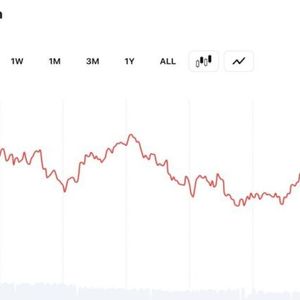

Vietnam has seen its once high-thriving crypto industry become a shadow of itself after the recent marketwide decline in digital assets. According to reports, the recent market decline has forced users to sell off their assets, with most retail traders currently in the red as a result of the development. Over the last few years, Vietnam has approached digital assets cautiously, allowing blockchain technology to develop in a grey area, unlike its neighboring China, which chose an outright ban back in 2021. In Vietnam, digital assets have been barred from being used as a medium of exchange, while the government allows its citizens to speculate on the assets without restriction. The move allowed its young population to sit at the forefront of crypto adoption, with an estimated 17 million people holding digital assets. What happened to Vietnam’s crypto industry? In the past few months, Vietnam has been making progress in its crypto industry. In January, the country announced that it had begun accepting applications from firms looking to operate a licensed crypto exchange in the country. Under the licensing framework, applicants must have a minimum contributed charter capital of 10 trillion Vietnamese dong ($400 million) alongside other requirements. The licensing program was rolled out under the legislation passed by the National Assembly of Vietnam in June 2025. However, what looked like a boom in the crypto industry has now turned into a liability as investors are presently in the midst of a crypto winter. The price of Bitcoin has almost halved since hitting a new record high above $126,000 in October, with other digital assets sliding even further. In an interview carried out by AFP, a university student in Hanoi, Hong Le, claimed that he had lost all his digital holdings. He claimed that his holdings rose to $200,000, but crashed when Bitcoin and other digital assets slid. Discussing the current market situation, Tran Xuan Tien, the head of Ho Chi Minh City’s blockchain association, mentioned that many companies have shut down as a result of the crisis. He added that others have also been downsizing, as most of them are looking for capital to extend their runway. His words were echoed by Nguyen The Vinh, co-founder of blockchain firm Ninety Eight, who mentioned that his company just laid off about one-third of its staff since last year. Industry figures call for plans to help the sector Talking about the future, Vinh added that the company is expected to carry out more restructurings in the future due to the gloomy outlook of the industry. “The market will likely remain difficult for years, not just months, so we need backup plans.” Until recently, Vietnam’s crypto sector was a careful place to be, with ventures dealing in highly speculative assets and Ponzi schemes flourishing alongside firms offering legitimate products. At the time, the Vietnamese government warned about the dangers of crypto and went after the perpetrators of some huge scam operations, especially one where investors were swindled out of more than $400 million. Under its leader, To Lam, the country is now pursuing growth reform, as it seeks to embrace the blockchain industry and assert control over the $100 billion market. While the law recognizing digital assets came into effect last month, investors have questioned its implementation. According to Vinh, most of the firms are halting operations, downsizing, or moving elsewhere because of the increasing decline and the unclear legal framework in the industry. He also added that new firms are struggling to gain popularity as investors are now choosing to wait out the turbulence in the market. In the past, investors were enticed by the promises of making 400% returns, but are now discouraged when they hear that they might lose everything. Get 8% CASHBACK when you spend crypto with COCA Visa card. Order your FREE card.
Cryptopolitan 2026-02-15 13:02
Reports note growing friction between big Bitcoin holders and the developers who maintain the network’s code. Nic Carter warned that if signs of a serious quantum threat are ignored, major investors could push for sweeping changes to how upgrades happen. Institutional Pressure And Protocol Risk Some large firms hold huge stacks of Bitcoin , which changes the politics of any perceived security gap. BlackRock owns a sizable amount of BTC, and that kind of exposure can force a boardroom-style view on what has long been a technical, community-driven process. If managers judge developers are moving too slowly, they may look for faster, more centralized fixes. That would shift power toward institutions that manage money for others and away from the volunteer contributors who have steered Bitcoin so far. In the Bits and Bips podcast episode that aired Thursday, Carter said he thinks the “big institutions that now exist in Bitcoin, they will get fed up, and they will fire the devs and put in new devs.” Quantum Threat And Timelines The technical issue at hand is simple to state and hard to time: powerful quantum computers could, eventually, break cryptographic schemes used to sign transactions. Austin Campbell suggested that big holders will demand answers if a structural weakness is found. Some people say there’s plenty of lead time to prepare; others worry the clock is closer than most assume. The gap between theoretical capability and an actual working attack makes judgments about urgency difficult. Is Bitcoin headed for a corporate takeover? @nic__carter joins @ramahluwalia , @austincampbell , and @perkinscr97 on this week’s Bits + Bips. They discuss: BlackRock’s growing leverage over Bitcoin development The end of the VC-backed token cycle Why AI may dwarf the… pic.twitter.com/cm6ocJuqRr — Laura Shin (@laurashin) February 11, 2026 Expert Views And Migration Plans Not everyone expects a corporate push to happen. Michael Saylor has argued that banks and governments face the same risks, so coordinated industry moves could buy time. Meanwhile, Adam Back warned that advanced machines might one day threaten signatures, but he also said migration to quantum-resistant options is doable with careful planning. Blockstream has worked on related research, and some community members have proposed staged upgrades to protect already-used keys and reduce exposure during any transition. Vitalik Buterin called for early research and thoughtful coordination, noting that slow, messy rollouts could do more harm than good. Market Context And Sentiment Reports note Bitcoin’s price has seen volatility in recent weeks. Coingecko data showed a meaningful pullback over 30 days, which some commentators linked to narrative shifts about technology risk. Price moves don’t prove a security problem exists, but they do change incentives. When money managers feel pressure from clients or trustees, technical debates can take on urgent political force. Corporate Takeover A Hypothesis? The idea that institutions could “fire” volunteer developers and install their own teams is a sharp one. It would require legal, technical, and social moves that are hard to pull off cleanly. Still, the possibility highlights a deeper point: as more fiduciary capital flows into crypto, the tolerance for unresolved technical risk shrinks. That may force a new kind of conversation between those who write code and those who hold large public money. For now, the prevailing view among many experts is that quantum computers are a future challenge rather than an immediate catastrophe. But with heavy stakes, quiet unease could become public pressure sooner than some expect. Featured image from Pexels, chart from TradingView
Bitcoinist 2026-02-15 13:00
As the Bitcoin price tumbled in the past few weeks, several investors are increasingly building short positions against the premier cryptocurrency. A recent analysis predicted an impending short squeeze, as the funding rates plunged to new lows. According to the latest on-chain data, this short squeeze not only happened; it occurred at a rate not seen in years. $736M In Shorts Wiped Out Across All Exchanges In a recent Quicktake post on the CryptoQuant platform, pseudonymous on-chain analyst Darkfost revealed that the Bitcoin market recently experienced the largest short liquidation event since September 2024. The relevant indicator here is the Short Liquidations USD metric, which tracks the total dollar value of short positions in Bitcoin that were forcibly closed (liquidated) by exchanges over a given period. Related Reading: Solana Funding Rates Hit 17-Day Negative Streak — What This Means For Price According to Darkfost, this liquidation event comes second when compared to the $773 million in positions forcefully closed on September 20, 2024. As was earlier mentioned, this event was preceded by a period where there were significantly high amounts of sell positions (reflected by the deeply negative funding rates) on Binance and other exchanges. Typically, when a disproportionate amount of short positions is forcefully closed, this offsets what is referred to as a short squeeze. During a short squeeze, sell-side liquidity is converted, by liquidation dynamics, to jet fuel for upward price movement. Darkfost further explained that the derivatives market is currently heavy with speculative positioning, while the spot market, on the other hand, continues to struggle with thin liquidity. This imbalance creates a fragile market environment, where aggressive shorts can amplify upside volatility if squeezed. However, it is worth noting that in the scenario where there is sustained scarcity of demand, the current upside rally sponsored by the short squeeze may also not be sustained. Hence, until the spot market starts to see a significant demand that aligns with the present conditions, Bitcoin is best described as being in an uncertain phase. Bitcoin Market Overview At the time of writing, the price of BTC sits at around $69,878, reflecting a 1.5% leap in the past day. On the weekly timeframe, the flagship cryptocurrency seems to have barely moved, recording a slight upward growth of about 0.7%. Meanwhile, the premier cryptocurrency continues to drift further away from its record-high of $126,080, now 45% deep in the red. Related Reading: When Will Bitcoin Bounce Back? Top Analyst Breaks Down Prior Major Corrections Featured image from iStock, chart from TradingView
NewsBTC 2026-02-15 13:00
The cryptocurrency market has remained highly volatile, with Bitcoin and Ethereum trading well below the record levels reached last year.
ZyCrypto 2026-02-15 12:03
Although Bitcoin ( BTC ) has staged a minor recovery, reclaiming the $70,000 level, a trading expert has suggested the asset still has room to drop into what they identified as its “sweet spot.” In this regard, insights from analyst TradingShot note that this area could serve as a key accumulation zone for Bitcoin as the asset posts its fourth consecutive weekly decline following a recent near test of the 200-week moving average. In a TradingView post on February 12, the analyst observed that Bitcoin approached the 200-week MA at around $56,000 before extending its pullback. Historically, the 200-week moving average has marked key bear market turning points, and a decisive break below it could signal a deeper correction. Bitcoin price analysis. Source: TradingView Last week’s low also neared the 0.382 Fibonacci retracement from the prior bear market bottom to the latest high. Similar past confluences between the 1-week MA200 and the 0.382 level have preceded extended bottoming phases. The area now also aligns with the 2.0 Fibonacci extension from the first leg of the 2022 bear cycle, reinforcing its technical significance. Bitcoin key levels to watch Based on this confluence, TradingShot pointed to the region between roughly $51,000 and $45,000 as the bear cycle “sweet spot.” The upper boundary sits near the 2.0 extension around $51,000, while the lower boundary aligns with the 0.5 Fibonacci retracement near $45,000. From a cyclical perspective, this range represents a historically favorable area for long-term investors to begin rebuilding positions. The analysis further outlined the 350-week MA as a deeper downside scenario that would mirror the structure of the 2022 bear market bottom, when price ultimately found support at the 350-week moving average before initiating a sustained recovery. This outlook comes as Bitcoin posts a modest rebound, reclaiming the $70,000 level after a steep sell-off pushed the price near $60,000. The bounce was sparked by cooler-than-expected January U.S. CPI data (2.4% YoY versus 2.5% forecast), fueling hopes for earlier Federal Reserve rate cuts and reviving risk appetite across equities and crypto. However, analysts view the move as a relief bounce amid deleveraging rather than strong new buying conviction. Persistent institutional caution and prevailing cycle patterns suggest possible further downside tests before any sustained uptrend. Bitcoin price analysis At press time, Bitcoin was trading at $70,664, up more than 2% in the past 24 hours and 1.5% on the weekly chart. Bitcoin seven-day price chart. Source: Finbold As it stands, Bitcoin remains well below both its 50-day SMA ($84,961) and 200-day SMA ($100,963). This positioning signals a clear bearish trend in both the medium and long term. When price remains under these key moving averages, it typically reflects sustained selling pressure and weak bullish momentum. The wide gap between the current price and the 200-day SMA further underscores the strength of the broader downtrend. The 14-day RSI stands at 38.69, placing it in neutral territory but leaning toward the oversold threshold of 30. This suggests bearish momentum is present, though not yet extreme. Featured image via Shutterstock The post Trading expert identifies Bitcoin’s price ‘sweet spot’ appeared first on Finbold .
Finbold 2026-02-15 12:01
Fear is everywhere in crypto, so why are institutions doubling down instead of running away?
AMB Crypto 2026-02-15 12:00
X Head of Product Nikita Bier has clarified that the platform will not act as a direct cryptocurrency brokerage, but it is launching "Smart Cashtags" to allow users to execute trades via third-party partners.
U.Today 2026-02-15 11:44
Ethereum price might have experienced some modest recovery late last week. However, the popular altcoin still reflects a broader bearish structure. Interestingly, a recent on-chain evaluation has surfaced, which paints a dark picture for Ethereum’s mid-term future, as opposed to imagined sustained relief. Taker Buy Sell Ratio Plummets To November 2025 Lows In a recent post on QuickTake , market analyst CryptoOnchain reveals that Ethereum derivatives traders are currently being dominated by aggressive sellers as indicated by the Ethereum: Taker Buy Sell Ratio on Binance, smoothed over with the 30-day moving average. For context, this metric measures whether aggressive market buyers or aggressive sellers are dominating the ETH futures market, and specifically on Binance (the world’s leading cryptocurrency exchange by trading volume). When the Taker Buy Sell ratio drops below the 1.00 threshold, it is a sign that taker sell volume is more than the taker buy volume. Basically, this means that there are more aggressive sellers than there are buyers. On the other hand, sustained readings above 1.00 signal that the futures market is currently being dominated by aggressive buyers. CryptoOnchain points out in his post that the metric’s readings currently sit around the 0.97 level, indicating that Ethereum’s current price action is being driven more by aggressive selling pressure. The 0.97 zone, interestingly, is the lowest since November, 2025. CryptoOnchain explains that this reveals a bigger sentiment shift among Ethereum futures traders over the past month, rather than being a temporary reaction to price action. What It Means For ETH Price The decline of the Taker Buy Sell ratio to 0.97 does not guarantee an immediate sell-off; more accurately, it shows that the bears are more likely to profit from Ethereum in the short-term. In the event that this bearish pressure is absorbed by spot demand, a sell-off would not ensue. On the other hand, if demand at key support levels fails to buffer Ethereum’s fall, the second-largest cryptocurrency could fall further. In addition, if there is a sudden injection of demand, the futures market simultaneously retains its extremely bearish sentiment; the Ethereum market could see a short squeeze, where the leveraged short positions are wiped out, thereby pushing prices to the upside with momentum. Hence, the Ethereum market is still in a very unstable phase, as prices could go in either direction, and with high momentum, depending on what happens first. As such, market participants are advised to tread the charts with caution. As of this writing, Ethereum holds a valuation of $2,085, reflecting a slight 1.7% gain since the past day, according to data from CoinMarketCap. Featured image from Flickr, chart from Tradingview
Bitcoinist 2026-02-15 11:00
Bitcoin steadied above $70,000 as pivotal legal and macroeconomic events loom next week. Meme coins like Dogecoin and Shiba Inu led weekend gains, sparking renewed optimism in markets. Continue Reading: Bitcoin Holds Firm Above $70,000 as Meme Coins Rally into the Weekend The post Bitcoin Holds Firm Above $70,000 as Meme Coins Rally into the Weekend appeared first on COINTURK NEWS .
CoinTurk News 2026-02-15 06:09
How options volatility, macro FUD, and market sentiment could make or break Bitcoin.
AMB Crypto 2026-02-15 04:00
Fidelity’s director of global macro says bitcoin’s drop to $60,000 likely marked the floor of its current cycle, setting the stage for a future bull market and a potential push toward new highs. Fidelity Macro Chief Links $118 Trillion Liquidity Level to Bitcoin’s Maturity Fidelity Director of Global Macro Jurrien Timmer shared on social media
Bitcoin.com 2026-02-15 03:30
Robert Kiyosaki says he would choose bitcoin over gold if forced to choose a single asset, citing its fixed supply, while projecting major upside for silver and warning that fiat currency is losing purchasing power. Kiyosaki Favors Bitcoin Over Gold If Limited to One Asset Rich Dad Poor Dad author and investor Robert Kiyosaki reiterated
Bitcoin.com 2026-02-15 02:30